Home Builder Marketing.
Nobody buys a new home in an afternoon. They follow builders for months, save floor plans, drive past communities on a Sunday, and never once fill in a form. By the time they call, the shortlist is already down to three. This page is about being on that list, and about what the site has to do for the year before the phone rings.
You Are Not Selling a Project. You Are Selling a Decade of Someone's Life.
A contractor sells a fix to an owner who already has a problem. You are selling to a family who does not have a problem at all. They have a school district in mind, a number in their head, and a marriage's worth of opinions about a kitchen. Nothing about that decision is urgent, and everything about it is emotional.
The Window Is Months, Not Days
A family can spend a year circling this. They are not ready when they find you and they will not tell you they exist. Your site has to be worth returning to while they are still undecided, because that return visit is the whole game.
Two People Have to Agree
One of them is reading about builder reputations at eleven at night. The other one wants to see the kitchen. A site that only speaks to one of those two loses the argument in the other room, where you are not present.
They Are Buying a Place First
Most families settle on a township, a commute and a school district before they settle on a builder. If your communities are not findable by name, you are not in that conversation no matter how good the houses are.
Three Tabs Open, Side by Side, on a Laptop at Ten at Night.
This is the moment that decides most of your revenue and almost no builder designs for it. The family is comparing your site against two others, line by line, looking for the one that answers first.
What They Compare
Plans and square footage. What is standard and what is an upgrade. Which lots are left. What the finished houses look like inside. How long a build takes. What other families said afterward. That is the list, and it is the same list every time.
What Loses
A gate. Every plan hidden behind a form, every price replaced with a line about calling for details, every lot map that is a PDF from two years ago. The competitor tab is one click away and it already answered.
What Wins
Being the easiest to compare. Publish the plans, show the lots, put the finished interiors on the page, and let the form be for the thing that genuinely needs a person: the model home visit and the lot conversation.
The instinct to hold information back comes from wanting the lead. It costs you the comparison. A family that cannot price you and cannot see your plans stops including you, and never calls to find out.
A Page for Every Community, and a Page for Every Plan.
Builders usually have one page called Communities and one page called Floor Plans, each holding a grid of thumbnails. That structure cannot rank, cannot be shared, and cannot be compared. Here is the shape we would build.
Community Pages
One page per community, named the way a family names it. The township, the school district, the commute, what is nearby, which plans are available there, which lots are still open, and photographs of that actual street rather than a rendering of a different one.
Floor Plan Pages
One page per plan. Square footage, beds and baths, the plan drawing, what is standard, what is an option, which communities it can be built in, and real interior photos of that plan finished. A plan a family can send to a parent is a plan that survives the shortlist.
Lot and Availability
A lot map that is current and dated, so a family can check it again next month and trust what it says. Scarcity is real in this business and it only works as a motivator if the number is believable.
The Model Home Visit
The single highest intent action on the whole site, and usually the hardest one to find. Hours, address, directions, what to expect, and a way to book it that does not require a phone call during working hours.
This is the same structure we build for every trade on this site, applied to the way a builder's inventory works. Every service behind it has its own page and its own published price on our services page.
The Photography Is the Product They Are Shopping.
A family cannot walk through a house that has not been framed. So what they are comparing, for months, is your pictures against two other builders' pictures. That makes photo and video the line in a builder's budget that pays back hardest, and it is the one most builders treat as an afterthought.
What We Would Shoot and Why
Finished interiors of real completed homes, plan by plan, because a family needs to see the kitchen they are being asked to imagine. A walkthrough of the model home, shot to be watched on a phone, because that is the closest thing to a visit for someone who has not driven out yet.
Then the part almost nobody does: a build in progress. Framing, mechanicals, the parts that get covered up. It is the most convincing proof of quality a builder owns and it is sitting on a job site every week, unshot.
What Renderings Cannot Do
A rendering shows intent. A photograph shows evidence. A page built only from renderings reads as a brochure, and a family that has been researching for six months knows the difference by now, because they have seen the same rendering style on all three sites.
Use renderings for the plan that has not been built yet, and be honest about which is which. Labeling a rendering as a rendering costs you nothing and buys you the credibility that makes the photographs land.
A Bad Build Is a Story People Repeat for Years.
A plumber with an unhappy customer loses a job. A builder with an unhappy family gets a thousand word review, a thread in a local group, and a name that comes up every time someone asks for a recommendation in that township. This is the risk that makes builder marketing different, and it has to be managed on purpose.
Recency Beats Perfection
Nobody expects a builder to have no complaints. What a family checks is whether the recent reviews are good, and whether there are enough of them that one bad month is not the whole picture. That means asking every closing family, every time, not once a year in a panic.
Answer the Hard One in Public
The reply is not written for the person who complained. It is written for the family reading it eight months later while deciding. A calm, specific, non defensive answer does more for you than the review does against you.
Own the Search for Your Own Name
People search a builder's name plus the word reviews before they visit a model home. If the only things that rank are third party sites, you are handing the introduction to somebody else. Your own pages should be there too.
The mechanics of this are ordinary and we run them for other trades already. Review requests that go out automatically at the right moment, monitoring so nothing sits unanswered for a week, and the profile kept current. It is on the reviews and reputation page with its price.
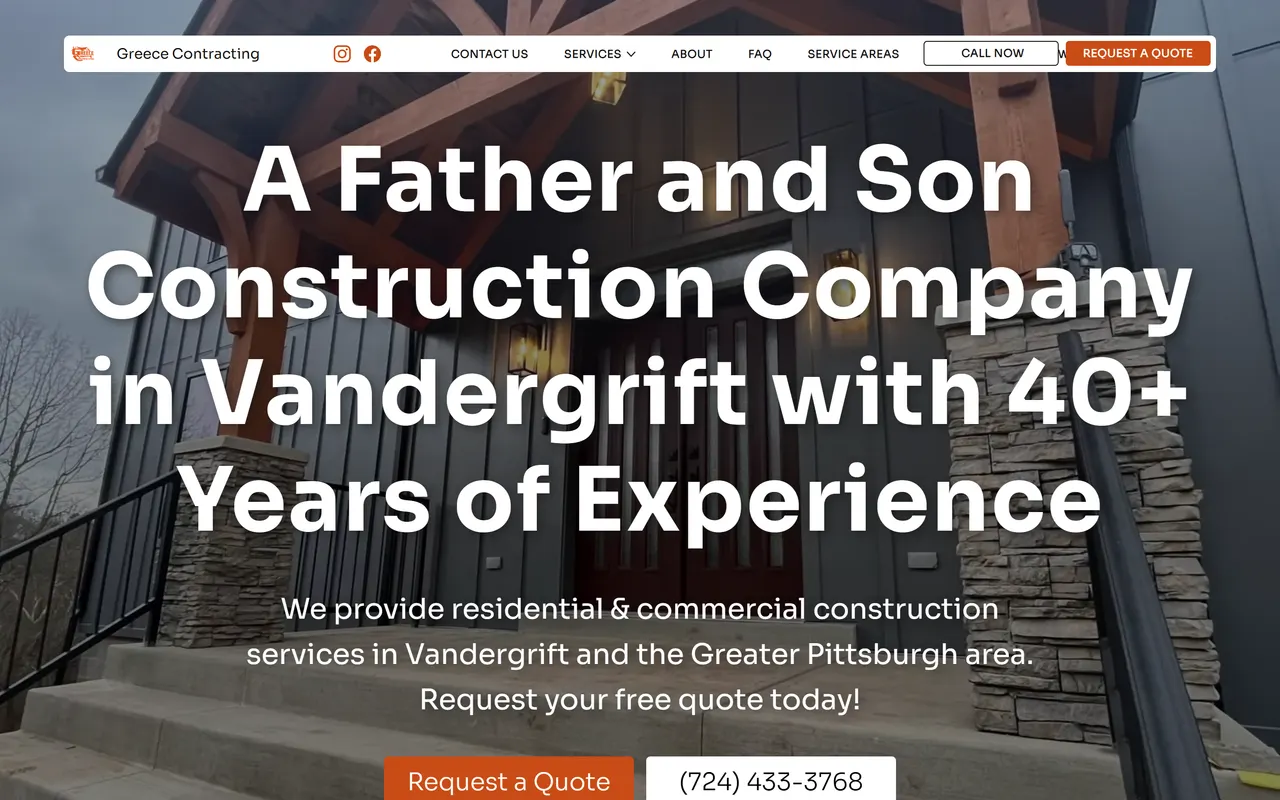
The site is live. Open it and judge the work yourself.
The Disciplines Behind This Page Are the Work We Do Every Day.
945 Studios works with construction and trade businesses. Local search, site structure that ranks, photography treated as the product, reputation, and selling into a long consideration cycle are the things we run every week. That is exactly what a builder's marketing is made of, and it is why this page reads the way it does.
What We Bring
- ✓Local search and map visibility, the same discipline whether the search is a township name or a service.
- ✓Page structure that ranks: one page per thing.
- ✓Photo direction, and getting your real work photographed.
- ✓Review systems, and lead follow up that answers a form at nine at night.
What We Would Learn From You
- ✓Your plan library, what is standard, and where the margin is.
- ✓How lots release, and how far ahead you sell against them.
- ✓What your sales team hears in the model home, because that is the real objection list.
- ✓Which townships and school districts drive your traffic, and which ones you wish did.
Every service underneath this has its own page and its own published price on our services page. Nothing about the way we work is a mystery until you sign something.
Questions a Builder Asks Before the First Call.
Where do we start if we have several communities?
With the one that has the most to gain, which is usually the community that still has lots to sell and the least visibility in search. We build that community page and one plan page properly, get the photography done there, and get them ranking. Then we repeat the shape across the rest. You get to see what the finished version looks like on a real community before you commit to doing it everywhere, and every page after the first one moves faster because the structure is already settled.
Why does a builder need a page for every community?
Because a family does not search for a builder, they search for a place. They type the name of a township, a school district or a specific community, and whoever owns that page gets found first. One page listing all your communities cannot rank for any of them well. A page per community, with the lots, the plans available there, the school district and real photos of that street, can rank for all of them.
How long is the buying window for a new home?
Long. Families look at builders for months, sometimes more than a year, before they ever contact one. That changes what the site is for. It is not a form that catches a ready buyer, it is the thing they keep coming back to while they are not ready. That means saved floor plans, a lot map they can check again next month, and updates they can follow without talking to a salesperson.
Should we hide our floor plans and prices behind a form?
We would argue no. The family is comparing you with two other builders on a laptop at ten at night. Every gate you put in front of a floor plan is a reason to open the competitor tab. Publish the plans, the square footage and the ranges, then use the form for the thing that needs a human, which is the model home visit and the lot conversation.
What do photos and video change?
They are the product. A family cannot walk through a house that has not been framed yet, so what they are shopping is your photography. Renderings on their own read as sales material. Real finished interiors, a walkthrough of a model home, and a build in progress on the street they are considering are the assets that carry a decision. This is also the cheapest thing most builders are underinvesting in.
What happens online when a build goes wrong?
It gets written down, and it stays. A bad experience with a builder lands on a family's largest purchase, so it turns into a long review, a forum thread and a conversation in a community group. The plan is to have enough recent, real reviews that one bad month does not define you, and to answer the hard review in public like an adult.
How much does this cost?
The same published numbers as everything else on this site. A full website build is $495 a month with no setup fee, a one page site is $499 setup plus $50 a month, and local SEO is $499 or $999 a month. A builder with several communities is more work than a single location trade, so tell us how many communities and how many plans and we will give you a real number.
Bring Us Your Communities and Your Plan List.
One conversation about your communities, your plans, how lots release and where your buyers come from. We come back with what we would build first, what we would shoot first, and which townships you are invisible in right now. You keep that either way, and if you want us to do the work, that is a separate decision and entirely yours. Every lever underneath it is written out in our free checklist for local map rankings.