Marketing for Christmas Light Installation Companies.
You have about ten weeks. The phone starts in October, the crews are full by the middle of November, and whatever you did not sell by then is gone until next year. This page is about filling that calendar on purpose: paid advertising that carries the season, night photography that does the selling for you, and a customer list that rebooks itself before the first cold weekend.
The Whole Year Is Decided Between October and Christmas.
Almost every trade has a slow month it can make back later. You do not. Demand goes from nothing to everything in about two weeks, holds for six weeks, and is finished by the third week of December. Marketing built on the assumption that there is always next month is the wrong shape for this business, and it fails quietly, one unbooked crew day at a time.
Demand Arrives All at Once
The first cold weekend flips the whole town on at the same hour. Every homeowner who has been meaning to call starts calling, and every installer in the county is competing for those same two weeks of attention with the same message.
A Slow Build Cannot Save It
Search work is paid forward. Pages published in October hold position by the spring, which is no use to a business that stops selling in December. This season has to be bought, and next season is the one you build for now.
Late Is the Same as Never
A homeowner who wanted lights and could not get them booked does not wait. They call the next installer on the list, and that installer now owns the house for every December after this one. A missed week costs you years.
Paid Ads Do the Work in Year One. Search Compounds Behind Them.
This is the part most agencies get backwards, because the honest answer is inconvenient. Search is the better long term investment and it is the wrong tool for a season that starts in six weeks. The two are not alternatives, they are a sequence, and getting the order wrong wastes a year of a business that only gets one shot a year.
Why Paid Goes First
Paid advertising is the only channel where you choose the start date. You can be in front of every homeowner in three towns the week you decide to be, at a volume you set, with a photo of a house they recognize the street of.
It is also the only channel you can turn down. When the crews fill up in the middle of November you pull the budget back so you stop paying for calls you cannot serve, then push it out again to sell the last week of December.
Meta does most of the lifting, because this starts as a want somebody has not yet gone looking for. Google catches the smaller group who already decided and are typing it in.
Why Search Still Gets Built
Every dollar of paid stops working the day you stop paying, and in this trade you stop paying in January. Search does the opposite. A page that holds position through one season keeps holding it through the next four, whether ten people find it or four hundred do.
So it gets built in the quiet half of the year, when there is time and nothing is on fire. Town pages, a real service page for each thing you sell, the Google profile filled out properly, and reviews gathered while the job is fresh.
By the second November a real share of the calendar arrives with no click cost on it, and the paid budget goes further because it covers less ground.
For the mechanics behind all of this, the paid side is our Meta Ads work and the part that compounds is local SEO, with the plan prices printed openly on that page.
Your Product Photographs Better at Night Than Anything Else in the Trades.
A plumber cannot photograph a repair in a way that means anything. A roofer gets one gray rectangle. You get a house glowing against a black sky on a street somebody recognizes, and that single image does more selling than any paragraph on this page. In this trade the photograph is the offer itself.
Shoot After Dark, From the Street
Stand where a neighbor would stand and get the whole house in frame. That is the shot that sells, because it is the exact view the buyer is imagining of their own house. A phone is fine. Daytime photos of bare bulbs are worthless and every installer has a folder of them.
One Angle That Shows the Roofline
The second shot is the detail one: the roofline against the sky, the peaks picked out, the trim line clean. It answers the question a homeowner cannot put into words, which is whether your crew is neat. Two photos a job, thirty seconds, and the season's creative builds itself.
Real Streets Beat Stock Every Time
A buyer in your town can tell a local house from a catalog photo instantly, and the local one converts. Name the town in the caption, put the same set on the Google profile, and run the strongest three as the ad creative. Nobody believes a designed graphic.
Swap the Creative Mid Season
Week three produces a better house than anything you shot last year. Rotate it into the ads while it is fresh, because the same image running for ten straight weeks stops earning and your audience is small enough to notice. Line up the strongest shot you own for the two busiest weeks.

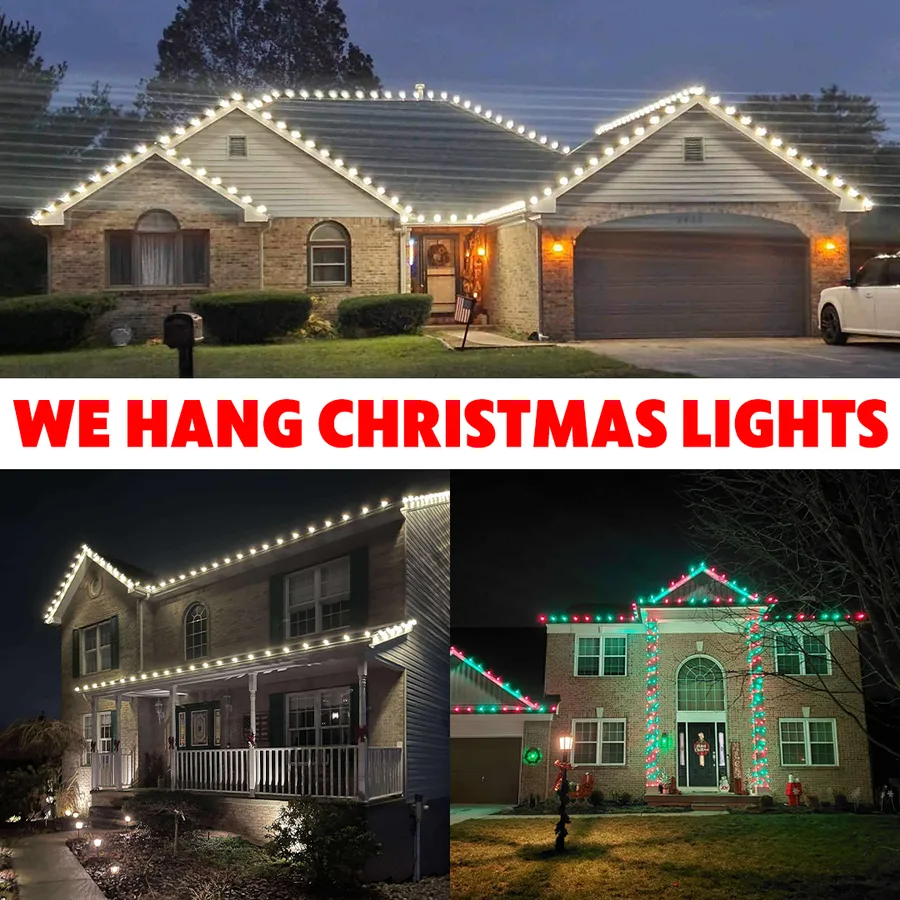

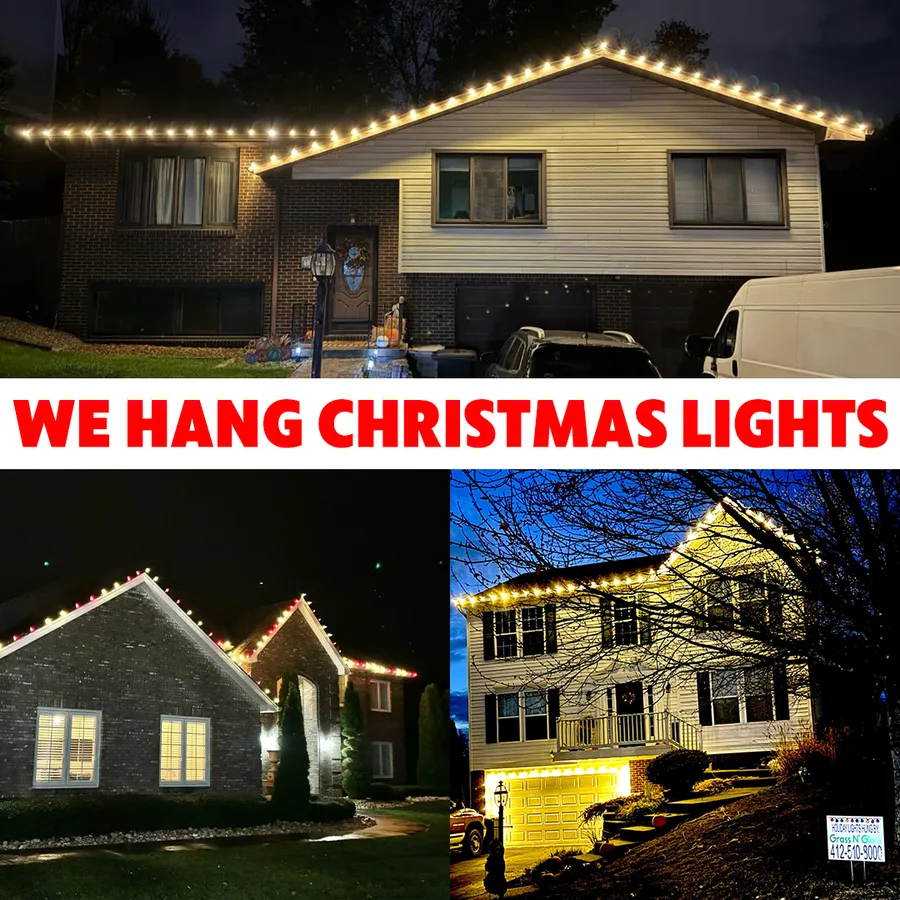
The four creatives from a real campaign in this trade. Every frame is the installer's own work, shot at night from the street, with no stock photography and no designed graphic. The headline does the naming and the houses do the selling.
Most of Your Buyers Decided on a Tuesday Night, Driving Home.
Somebody drives past a lit house two streets over, decides they want that, and acts on it within a day or two. It is an impulse with a deadline on it. The window between wanting it and forgetting about it is short, and everything below is about being in front of that person while it is open.
- The triggerA neighbor's house goes up. Nobody sets out to buy Christmas lights, they see them and want them, which is why the winning ad is a photo of a house. Run the creative in the towns you already have installs in, because the trigger has already fired there.
- The same nightThey look you up on a phone, on a couch, at nine at night. The page has to load fast, show a night photo above everything else, and put a price range and a booking step where a thumb lands. Anything that asks them to think about it tomorrow loses them to tomorrow.
- Within two daysThey either book or the feeling passes. Reply speed is the whole game at this stage: an instant text acknowledging the request, a real answer inside the hour, and an actual date offered. The installer who answers first usually just wins.
- The install weekTheir lit house is now the trigger for their own street, which is how this trade grows. Ask for the review while the lights are on, take the night photo before you leave, and drop a door hanger on the six closest houses the same evening.
The instant reply and the follow up have to run as systems, because nobody on a ladder in December is watching an inbox. That is the automation and CRM side of what we build, and in a ten week season it earns its cost in the first two weeks.
You Are Not Selling an Install. You Are Selling a House, Every December.
Installers describe this as a one off job and then wonder why every season starts from zero. The same house wants the same thing next year, the customer already knows the price, and they already let your crew on their roof once. Two things turn that into revenue, and neither of them costs anything to sell.
Takedown and Storage Is the Second Sale
Takedown in January and storage until October are line items on a job you have already won. Margin on both is high, the customer is relieved to hand off the worst part of it, and you are the only person positioned to offer it while standing on their driveway.
The strategic half matters more than the money. A company holding somebody's lights in a warehouse is the company that gets rebooked, because switching installers now means an awkward phone call and a pallet to collect.
It also buys a January conversation in a business that otherwise disappears for nine months, and that is when next year's date gets penciled in.
Last Year's List Is the Cheapest Revenue You Have
Every house you lit last year is a warm booking sitting in a spreadsheet. They want it again, they know the number, and they are hoping somebody makes it easy. A message in August offering their own date back to them books a serious share of the season before a dollar of advertising is spent.
Do that first, deliberately, and the paid budget only has to cover what is left. Most installers do it last, in a panic, in the second week of November when the calendar is already tight.
The record is what makes it work: the address, the photo, the linear feet, the bulb type and the date, kept somewhere that is not your head.
You Sell Crew Days, Not Leads. The Marketing Should Know That.
Two crews working forty installable days is the ceiling, and no amount of lead volume moves it. That makes this a rare business, where the honest target is a full calendar, filled in the right order, with the right jobs sitting in the weeks that are hardest to sell.
Fill October Before November
The early weeks are the hard ones, because nobody feels festive yet. An early booking discount pushes willing customers into the empty part of the calendar and leaves the crowded weeks for people who will pay full price.
Sell the Route
Six houses on one street is a far better day than six houses across three towns. Target the streets you are already working, put the door hangers and the neighbor ads there, and the same crew day produces more revenue.
Turn the Offer Down, Not the Ads Off
When you are booked, keep the campaign running and move the page to a waitlist with real dates. You keep the addresses, the reviews and next season's pipeline, and you still sell the odd late cancellation.
The Setup for a Christmas Light Installation Company, Piece by Piece.
None of these are unique products. They are the same services 945 Studios runs for every trade, ordered and pointed at a ten week season. Every one of them carries its price on its own page.
A Page Built for a Night Photo
One long page, a lit house above everything else, a price range in the open, and a booking step within a thumb's reach. Fast on a phone at nine at night, which is where the decision happens.
Paid Campaigns That Start on a Date
Meta for the homeowners who want it once they see it, Google for the ones already typing it in. Scaled up in September, pulled back the week the crews fill, pushed out again for late December.
Creative Built From Your Own Installs
The night shots your crew takes become the ads, the page, the profile photos and the door hangers. Real houses on real streets in the towns you serve, refreshed as the season produces better ones.
A Profile That Wakes Up in September
Google Business Profile categories, services and service areas set for holiday lighting, then job photos posted through the season and reviews answered while the lights are still on the house.
Instant Reply and a Real Calendar
A text alert the second a request lands, an automatic acknowledgment to the buyer, and a booking step that offers an actual install week.
The List, Recorded and Worked
Address, photo, linear feet, bulb type and install date on every job, with the August rebook message and the takedown and storage offer scheduled to fire whether or not you remember.
If the site is the missing piece, that is our web design work. If the season needs buying, Meta Ads is where it starts, and every service we run is listed with what it covers.
What a Season of This Looks Like.
Below is a real Meta campaign in this trade, run on the creative above. It is one campaign in one market and it is not a promise about yours, but it is a measured number rather than a claim.

On the Numbers
Four ad sets ran. The two carrying lead forms produced every lead; the other two spent $25.93 between them and produced none. Meta reports 42 in its Leads column and 36 under Results, Lead (Form). The $14.99 above divides the spend by the 42, and Meta's own cost per result against the 36 was $14.60 on one ad set and $21.52 on the other. Reach is counted per ad set, so the 25,008 figure is a sum of two numbers and double counts anyone who saw both ads. The campaign has finished running.
Leads are the start of the report, not the end of it. The four we hold a season against are cost per booked install, crew days sold, how much of last year's list rebooked, and how many jobs had takedown and storage attached. Everything else a dashboard produces is a proxy for one of those, and a proxy is what gets quoted when the real number is not good.
What Installers Ask Us First.
When should a Christmas light installation company start marketing?
August, and the ads go live in September. Homeowners start thinking about it far earlier than installers expect, and the ones who book in September are the ones who booked with somebody else last year and want their date locked.
Waiting until the first cold snap means bidding against every other installer for the same clicks in the same three weeks, at the worst price of the year.
Is search worth doing for a season that only runs ten weeks?
Yes, but not to rescue this season. Pages and reviews take months to hold position, so search work started in September pays out next November rather than this one.
The honest sequence is paid first to fill the calendar now, search built quietly underneath it, and by year two a meaningful share of the season arrives without a click cost attached to it.
What kind of photos do you need from us?
Night shots of finished installs, taken from the street. That is the whole list. Shoot after dark from where a neighbor would stand, get the whole house in frame, and take one from an angle that shows the roofline against the sky.
A phone handles this fine. What ruins it is a daytime photo of bare bulbs or a close crop that could be anybody's porch.
Should takedown and storage be sold separately?
Sell them together and price them apart. Takedown in January and storage until October are two more line items on a job you already won, they cost you almost nothing to sell, and they hand you a January touchpoint that keeps you in the customer's calendar.
They also lock the following season, because a company holding your lights in a warehouse is the company you rebook.
What do we do with last year's customer list?
Work it before you spend a dollar on advertising. Every house you lit last year is a house that already wants it lit again, already knows what it costs, and already trusts your crew on their roof.
A short message in August with their own date offered back to them fills a large part of the calendar at no acquisition cost, and it tells you how much of the season paid advertising still has to cover.
How do we stop the leads once the crew is booked out?
You turn the offer down, not the marketing off. Switching ads off throws away the pipeline for next season and the reviews that come with it.
Move the page to a waitlist with real dates, quote a later install week, and keep collecting the addresses. Capacity is the constraint in this trade, so the calendar is what the marketing is aimed at, not the lead count.
Book the Season Before the Season Starts.
One conversation about how many crew days you can sell, which towns you already have installs in, and what happened to last year's customer list. We come back with a short list of specific opportunities and what it would take to have them running before the first cold weekend. You keep the list either way, and whether you hire us for any of it is entirely your call.