 Nick Lookabaugh
On this page
For years, the SEO industry has treated organic rankings and conversion rate optimization (CRO) as two separate disciplines. In this traditional view, SEO brings the user to the door, and CRO coaxes them through it.
But after managing campaigns across multiple clients and diverse industries, our agency has observed a recurring, undeniable pattern that challenges this separation. We call it Conversion Clustering.
When a user completes a high-friction contact form via organic search, we frequently observe a second, completely independent lead submission in rapid succession, often within minutes. This is not a technical glitch, a double-firing tag, or a coincidence. It is a repeatable behavioral pattern.
Our observations suggest a powerful reality: a completed high-friction goal event triggers a localized, immediate search visibility spike, driving immediate follow-on traffic and subsequent conversions to the domain.
We also covered this on video.
Watch on YouTubeThe "Aha" Moment: Moving Past Coincidence
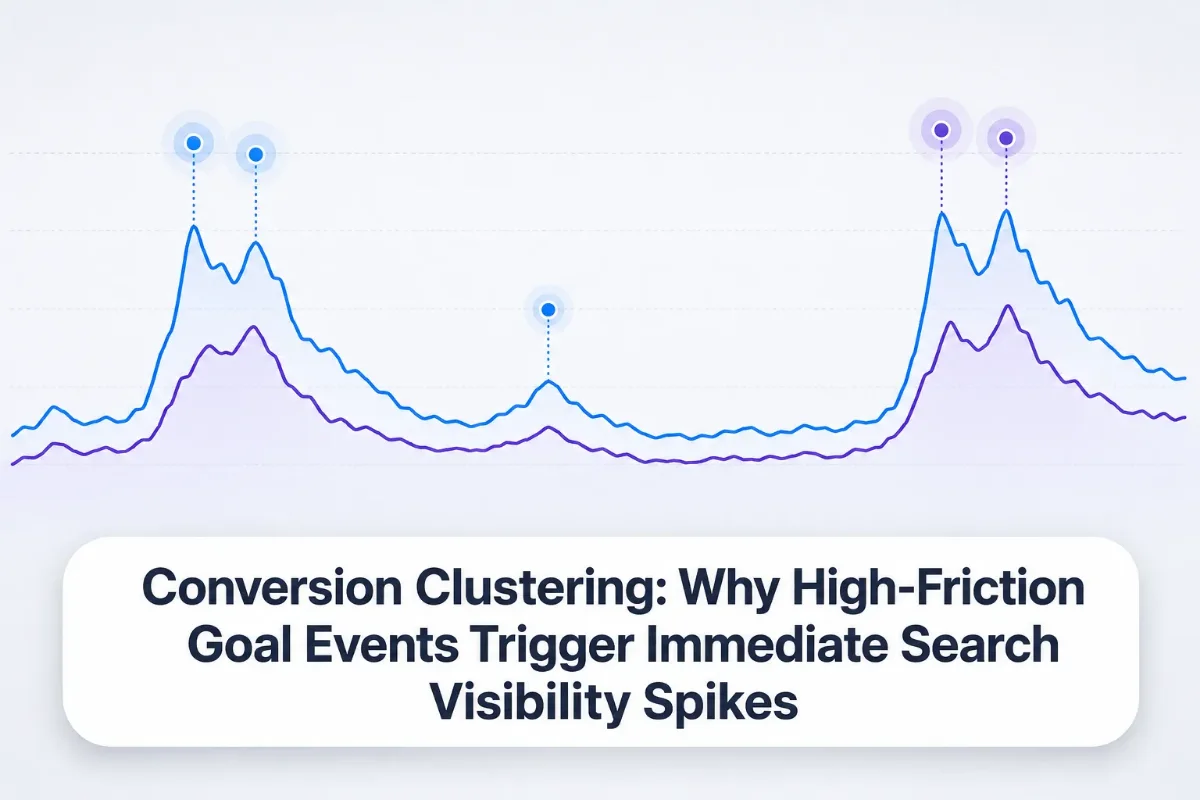
It is easy to dismiss a double conversion as a fluke. The first six or seven times we saw this happen over the course of a year, we chalked it up to random chance. But by the tenth instance, the pattern became impossible to ignore.
The definitive "aha" moment occurred recently. Within a highly compressed timeframe, two entirely different user personas (avatars) searching from different locations landed on a client's site and completed our detailed contact forms. The actions happened too rapidly, and across too many distinct client profiles, to be a coincidence.
This repeated behavior revealed a clear correlation: real-world goal completions directly influence real-time search visibility.
Defining "High-Friction" Goals (and Why Google Cares)
In marketing, the common consensus is to reduce friction, shorten forms, remove fields, and make conversion effortless. But in our framework, high-friction forms are the ultimate validator of search intent.
We define a high-friction goal event as:
- A detailed, 10-field contact or estimate form requiring deep user intent.
- Multi-step project builders that need a lot of information (name, email, phone, how can we help, address, and more unique identifiers depending on industry type).
- Actions that require the user to invest time and share highly specific project details.
Why Search Engines React Favorably
Google's stated objective has always been to connect searchers with the absolute best end goal. Recently, Google has doubled down on the importance of maximizing helpful content.
If a user conducts an organic search, navigates your site, and spends several minutes filling out a 10-field form, they have found the ultimate "helpful" destination. The search engine has successfully fulfilled its objective. To reward this successful match, the algorithm temporarily boosts the site's real-time visibility for similar search queries, anticipating that other active searchers will find the same value.
The Mechanics: The 15-Minute "Chaining" Window
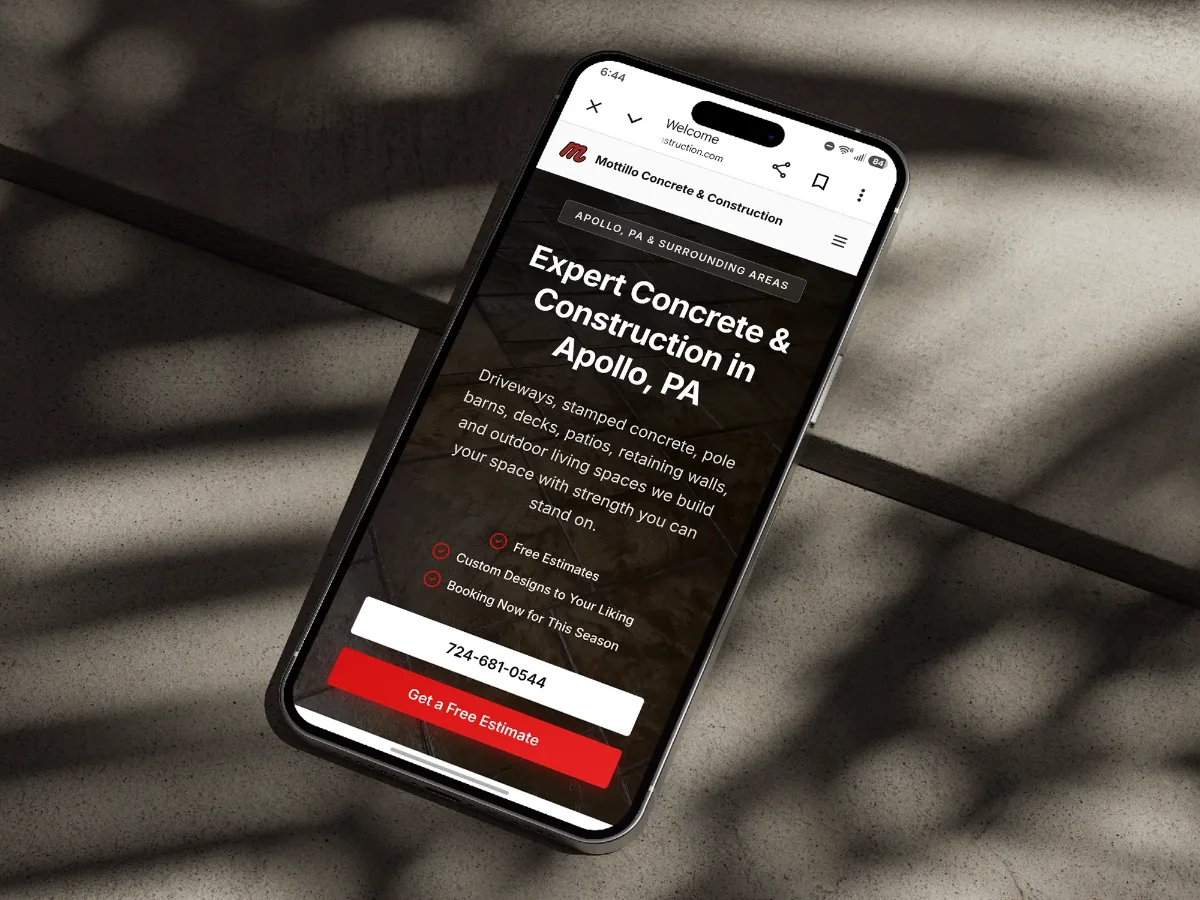
Based on our subjective observation data across multiple accounts, this visibility spike operates on a highly immediate, real-time feedback loop:
- The Trigger. A user completes a high-friction organic form.
- The Immediate Window. A search visibility spike occurs almost instantly, typically lasting within a 10 to 20 minute window.
- The Chaining Effect. If another user converts within that initial window, the visibility boost is extended, with an additional 15-minute increase for each subsequent conversion.
- The Extended Boost. Beyond the immediate chaining window, our review of conversion timing has also turned up a longer secondary lift. Higher visibility and follow-on conversions continue for up to three to four hours after the original trigger event, even without additional chaining conversions in between.
When multiple high-intent users are active during peak traffic hours, these goal completions chain together, keeping the visibility window open and generating a cluster of high-value leads. And even outside of that immediate chaining activity, the extended three to four hour window means a single high-friction conversion can continue paying dividends well past the first spike.
The Strategic Playbook: Treat Every Lead as a Seed
This observation completely changes how businesses should handle lead generation. If a goal completion on your website directly increases the likelihood of securing another organic lead, then on-site form completion is your most valuable marketing asset.
Many businesses cut corners by handling inquiries entirely over text, phone, or email without directing the user to the site. This is a massive missed opportunity.
The Proven Process
By implementing a structured process to clean up tracking and actively drive users to on-site forms, we have seen clients experience up to a 40% increase in leads within three months of system alignment.
To put Conversion Clustering to work, adopt this simple, high-impact playbook:
- Prioritize the on-site form. Even if a prospect is already talking to you via text or social media, actively encourage them to visit your website and complete your official project form.
- Stop cutting corners on QA. Broken tracking, undocumented setups, and ad-hoc patches mask these visibility spikes. Ensure your forms and tags are flawlessly configured.
- View leads as multipliers. Treat every single lead not just as a sales opportunity, but as the algorithmic seed required to trigger your next organic search visibility spike. That seed keeps working long after the form is submitted. Because the extended lift we have tracked can run three to four hours past the original conversion, a single completed form is not a one-shot trigger. It is a multi-hour asset that can still be paying off in new leads well after the initial spike has faded.
Conclusion: The Value of the Loop
This phenomenon is only visible when you step back from automated SEO tools and look at the real-world relationship between user behavior and search performance across a broad portfolio of clients.
By understanding that conversions drive visibility just as much as visibility drives conversions, you can stop waiting passively for traffic and start actively fueling the algorithmic loop that dominates organic search.
Frequently Asked Questions
What is Conversion Clustering?
Conversion Clustering is the pattern our agency has observed where a completed high-friction contact form via organic search is quickly followed, often within minutes, by a second, independent lead submission. Rather than a coincidence or tracking glitch, we believe this reflects a real, repeatable relationship between goal completions and short-term search visibility.
What counts as a "high-friction" goal event?
A high-friction goal event is a conversion that requires real user investment, such as a detailed 10-field contact or estimate form, a multi-step project builder (for example, a bathroom remodel or commercial construction estimate), or any action where the user shares specific project details. These are distinct from low-friction actions like a quick newsletter signup.
How long does the visibility boost from a conversion last?
Based on our observation data, the initial visibility spike appears almost immediately and typically lasts 10 to 20 minutes. If another user converts within that window, the boost extends by an additional 15 minutes per subsequent conversion. Beyond that immediate chaining window, we've also tracked a longer secondary lift, with higher visibility and follow-on conversions continuing for up to three to four hours after the original trigger.
Why would completing a form affect search rankings?
Google's stated goal is to connect searchers with the most helpful result. When a user completes a detailed, high-intent form after an organic search, that's a strong signal the site successfully met the search intent. We believe the algorithm temporarily rewards that match with a real-time visibility boost, anticipating that similar searchers will find the same value.
What should businesses do to take advantage of Conversion Clustering?
Businesses should prioritize directing every prospect, even those already talking via text, phone, or social media, to complete an official on-site form, keep tracking and tagging clean so the pattern isn't masked by technical errors, and treat each lead as a multiplier that can help trigger the next visibility spike, not just a single sales opportunity.
Your Site Should Capture Every High-Intent Visitor.
If your site isn't built to convert, you're leaving this entire visibility loop on the table. We design mobile-first, conversion-focused websites engineered to turn organic search traffic into real leads.
Or email 945studios@gmail.com. You'll reach Nick, not a call center.